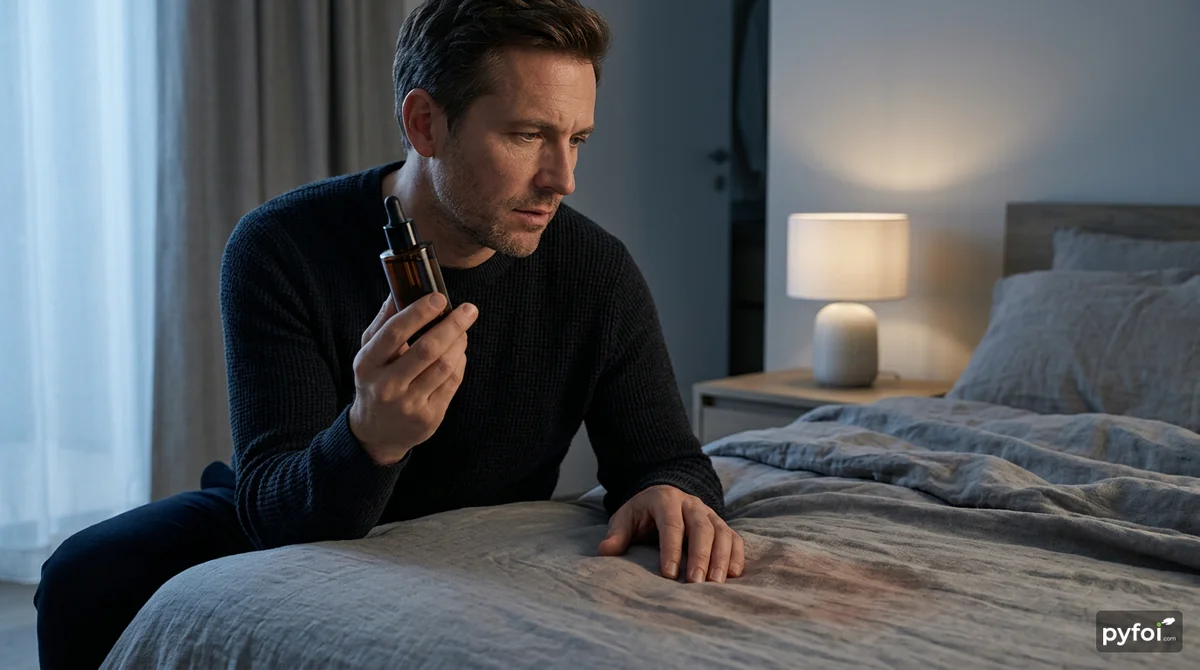

Is Your Mattress Ageing You Faster Than Time?
Poor sleep accelerates biological ageing across skin, brain, and body. Learn how mattress surface temperature undermines deep sleep and overnight cellular repair.
You've invested in the serum. The retinol sits on the nightstand. Maybe you take collagen supplements and wear sunscreen religiously. You're doing the work. But every morning the mirror tells a story that doesn't match the effort. Fine lines creeping in too early. A foggy heaviness that no amount of coffee fixes.
Most people treat ageing as something that happens during the day. Almost nobody looks at the eight hours they spend lying down and asks whether their mattress is accelerating the process.
What if your night cream depends on something your mattress won't let happen?
Here's the part the skincare industry doesn't mention. Your skin does its heaviest repair work during deep sleep. That's when growth hormone peaks, collagen production ramps up, and damaged cells get replaced. Deep sleep isn't just rest. It's your body's nightly renovation shift.
Cut deep sleep short, and the renovation crew goes home early. Research from University Hospitals Case Medical Center scored sleep quality against clinical skin ageing using the SCINEXA index. Poor sleepers scored twice as badly as good sleepers (4.4 versus 2.2), with 30% slower skin barrier recovery after UV exposure, reduced elasticity, and persistent redness [1].
Think of it like painting a house in the rain. You can buy the best paint available, but if conditions won't let it cure, the finish fails. If your mattress traps heat and fragments your sleep cycles, your anti-ageing products are curing in the rain.
Instead of "which night cream works best?", try asking:
- How much deep sleep am I actually getting?
- Is my mattress surface temperature disrupting my sleep cycles?
- Am I investing in products that depend on a biological window my sleep surface is closing?
The biological cost of broken sleep
The evidence goes well beyond appearance:
- Poor sleepers scored 2x worse on clinical skin ageing measures, with visible differences in fine lines, elasticity, and evenness [1].
- Skin barrier recovery after UV exposure was 30% slower in poor-quality sleepers [1].
- Skin hydration measurably declines after just one day of poor sleep.
- Chronically sleep-deprived individuals lose the equivalent of 4 to 7 years of cognitive function [2]. Deep sleep is when the brain clears beta-amyloid through the glymphatic system. Less deep sleep means more accumulation and faster cognitive decline.
- Growth hormone, essential for tissue repair, is released primarily during deep sleep. A hot mattress that fragments sleep architecture suppresses that release.

This isn't cosmetic. It's structural ageing at a cellular level, across skin, brain, and body.
What does this look like over three years?
Picture two versions of yourself. In one, you sleep deeply. Your skin repairs nightly. Your brain clears metabolic waste. You look and feel roughly your age.

In the other, your mattress traps heat, nudging you out of deep sleep dozens of times a night without waking you. After one year, the difference is subtle. After three, it's visible in the mirror and measurable in cognitive tests. You forget things you wouldn't have forgotten two years ago. And you've spent between $720 and $3,600 on skincare that never had the biological conditions it needed to work [1].
Unlike financial costs, biological ageing damage is only partially reversible. You can't recover years of impaired cellular repair. The deficit compounds quietly and permanently.
How should you rethink what "anti-ageing" actually means?
Shift the framework from products to conditions. Three factors matter more than any serum:

- Deep sleep duration. The single largest variable in overnight repair. A heat-trapping mattress directly reduces your body's time to regenerate.
- Surface temperature management. Your body needs to drop its core temperature to enter and sustain deep sleep. A mattress holding 35 degrees at the surface fights that process all night.
- Consistency across years, not nights. One good night won't reverse damage. What matters is thousands of nights of unbroken deep sleep over your mattress's lifespan.
What does a sleep-first anti-ageing strategy actually look like?
Start by auditing your sleep. If you use a wearable, check your deep sleep numbers. Consistently under 60 to 90 minutes per night is a red flag.
When shopping, ask the retailer what the surface temperature is after four hours of body contact. If they can't answer, that tells you something. Look for materials that actively regulate temperature at the skin-contact layer, not just labels like "cooling gel" or "breathable cover." Phase-change materials that absorb and release heat hold the surface closer to 29 degrees rather than letting it climb into the mid-thirties.
If you're spending $50 to $200 a month on skincare, consider the maths. Over three years, that's potentially thousands of dollars applied on top of a sleep surface that undermines the repair window those products need. Redirecting even part of that budget toward a mattress that protects deep sleep may deliver more visible results than any product on your nightstand.
For the 80% of perimenopausal and menopausal women who deal with hot flushes [3], mattress surface temperature is not a comfort preference. It's a direct variable in sleep quality, recovery, and the rate of visible ageing.
Your body already knows how to repair itself. It does it every night, during deep sleep. The question is whether your mattress lets it finish the job, or sends the crew home early, night after night, year after year.
You may also be interested in these independent articles
Sources
© 2026 pyfoi. All rights reserved.