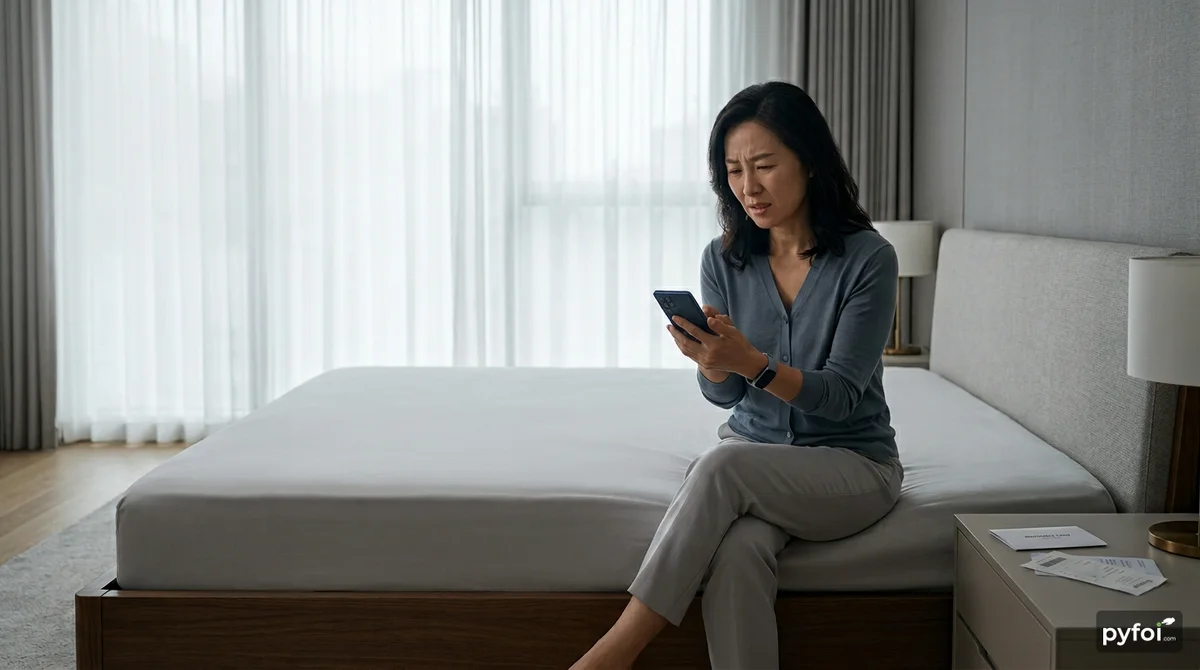

You Spend 2,500 Hours a Year on Your Mattress - So Why Does the Relationship End at Checkout?
Your mattress delivers 20,000 hours of use over its lifetime, yet offers zero post-purchase support. Learn how to evaluate mattress brands as long-term sleep partners.
You've done the research. Tested firmness in the showroom. Compared prices. You hand over somewhere between $1,500 and $3,000, the delivery truck arrives, and then... silence. No follow-up. No tips on getting the best out of your purchase. No check-in at three months when the mattress has broken in. For a product you'll spend more time on than anything else you own, the brand relationship ends the moment you sign the receipt.
What if the real problem isn't the mattress - it's what happens after you buy it?
Most people evaluate a mattress as a one-time purchase: spend well, sleep well, move on. But consider this. You'll log roughly 2,500 hours on your mattress every year [1]. Over an average ownership period of 8.3 years, that's over 20,000 hours of use. No other product in your home comes close.
Now compare that to a $300 smart ring. Oura Ring users pay $6 a month for ongoing sleep scores and personalised recommendations. Oura has built over $500 million in revenue [2], much of it from subscriptions, because users value a continuous relationship with their sleep data. A ring on your finger talks to you every morning. A mattress you spend eight hours a night on says nothing.

The question worth asking isn't "which mattress has the best reviews?" It's: What happens between purchase and replacement? Who helps me optimise 20,000 hours of sleep?
What are you missing out on during those 20,000 hours?
The gap between what your mattress could do for your sleep and what actually happens is wider than most shoppers realise:

- The average mattress owner has zero brand engagement across 8.3 years and over 20,000 hours of product use [1]. No feedback loop, no education, no proactive support.
- 73% of mattress shoppers say health benefits matter to them, yet only 29% of in-store conversations cover health [3]. The information gap starts at the point of sale and never closes.
- Up to 30% of your sleep quality is influenced by factors you can actively control [4]. Without guidance, most people never adjust anything after the first week.
- Consumers who track their sleep report higher satisfaction with their sleep investments [4]. Data changes behaviour. But almost no mattress brand gives you data or helps you interpret it.
You wouldn't buy a car and never service it. You wouldn't join a gym and never speak to a trainer. Yet that's exactly how the mattress industry operates.
What does a decade of silence actually feel like?
Picture this. It's three years into owning your mattress. You're sleeping poorly, waking up stiff, feeling unrested. You blame work stress, or the kids, or the weather. You buy a mattress topper. You try a new pillow. You download a meditation app.
What you don't do is revisit the mattress itself. Nobody reminded you that foam changes over time, that surface temperature behaviour degrades as materials compress. The brand that sold you 20,000 hours of sleep has been absent for 7,000 of them. You're spending money on accessories that address symptoms while the root cause sits underneath you every night.
That frustration compounds. When replacement time comes, you feel cynical about the whole category. "They're all the same." But you never had the information to get the most out of what you already owned.
How should you think about the mattress relationship differently?
Shift from treating a mattress as a transaction to treating it as a long-term sleep system. Here's a simple framework:

- Look for brands that offer post-purchase support. Do they provide guidance on break-in periods, rotation schedules, or sleep environment setup? If the relationship ends at checkout, that tells you how they view your 20,000 hours.
- Consider whether the product connects to your sleep data. If you wear a tracker, does the brand offer any way to correlate your sleep metrics with their product? The technology exists.
- Ask about the mattress lifecycle. How does the surface perform at year three versus day one? What changes should you expect?
- Value ongoing engagement over one-time features. A mattress paired with guidance on optimising your sleep environment season by season is worth more than features alone.
What should your next mattress purchase actually include?
Start with a direct question in the showroom: "What support do I get after I buy this?" If the answer is just a warranty card and a phone number for complaints, you're looking at another decade of silence.
Look for brands investing in sleep education, not just product marketing. Some manufacturers now offer seasonal sleep guides and break-in advice. These aren't gimmicks. They're acknowledgements that your sleep needs aren't static over 20,000 hours.
If you use a wearable, pay attention to your data in the first month after purchase. Track your deep sleep, heart rate, and HRV. This gives you a personal baseline and a way to notice when performance shifts over time, even if the brand isn't watching.
Before you buy, ask yourself: am I choosing a product, or am I choosing a partner for the next 20,000 hours of sleep? The brands worth your money are the ones building something that lasts beyond the delivery date. Make sure the company behind your mattress treats those hours like they matter.
You may also be interested in these independent articles
Sources
© 2026 pyfoi. All rights reserved.